
DSAA InSituLab (Le Corbusier Illkirch-Graffenstaden)

InSituLab is a postgraduate diploma in applied arts (DSAA) devoted to site-specific public policy, awarded at the Lycée Le Corbusier in Illkirch-Graffenstaden. A master’s-level qualification, it welcomes students aged 20 to 25.

Through this programme, young designers and artists are trained to intervene directly in specific territories, weaving together artistic practice, local context, and public commission.

This demanding course of study combines field research, formal experimentation, and dialogue with the actors of the places involved, giving rise to projects that take on meaning within their site of implantation.
EXHIBITION

Re-Registres

Town

Sainte-Marie-aux-Mines

Exhibition venue

#4 Eglise des Chaînes, Sainte-Marie-aux-Mines

Year

2026

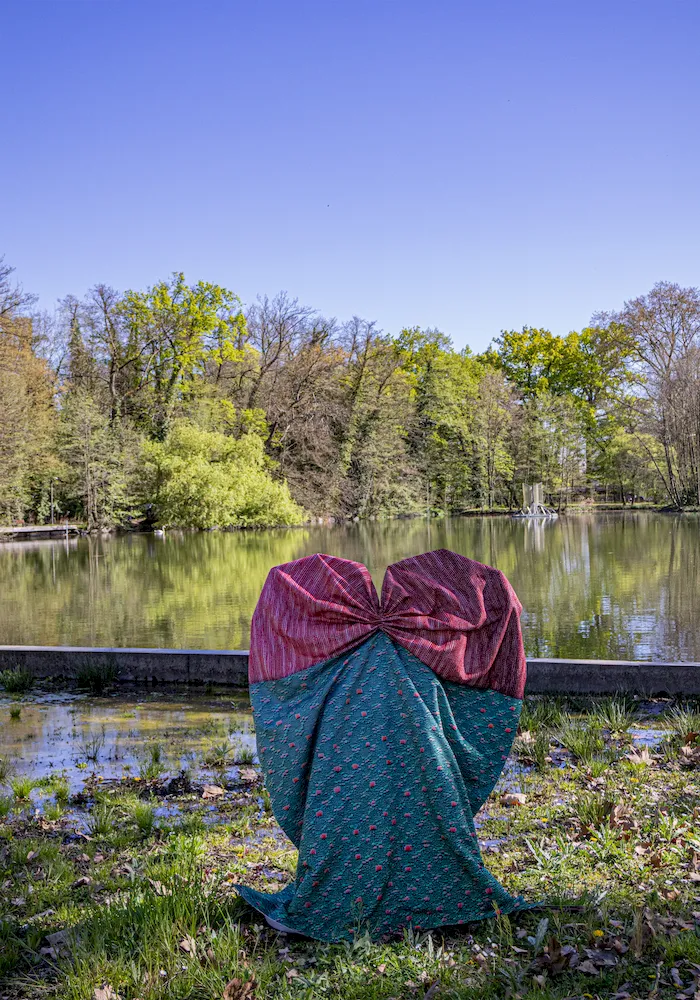
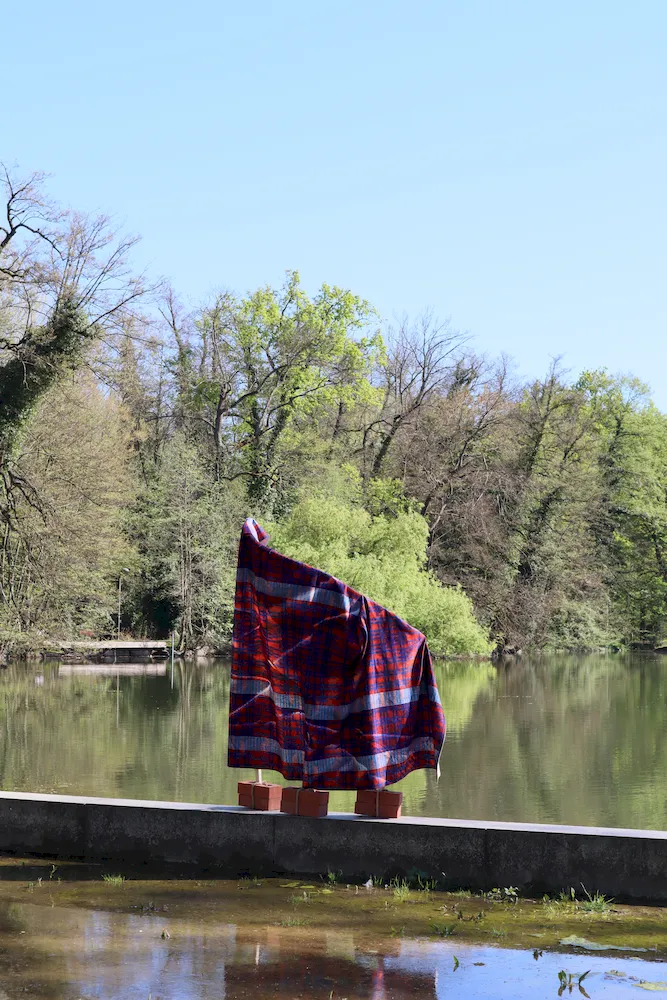
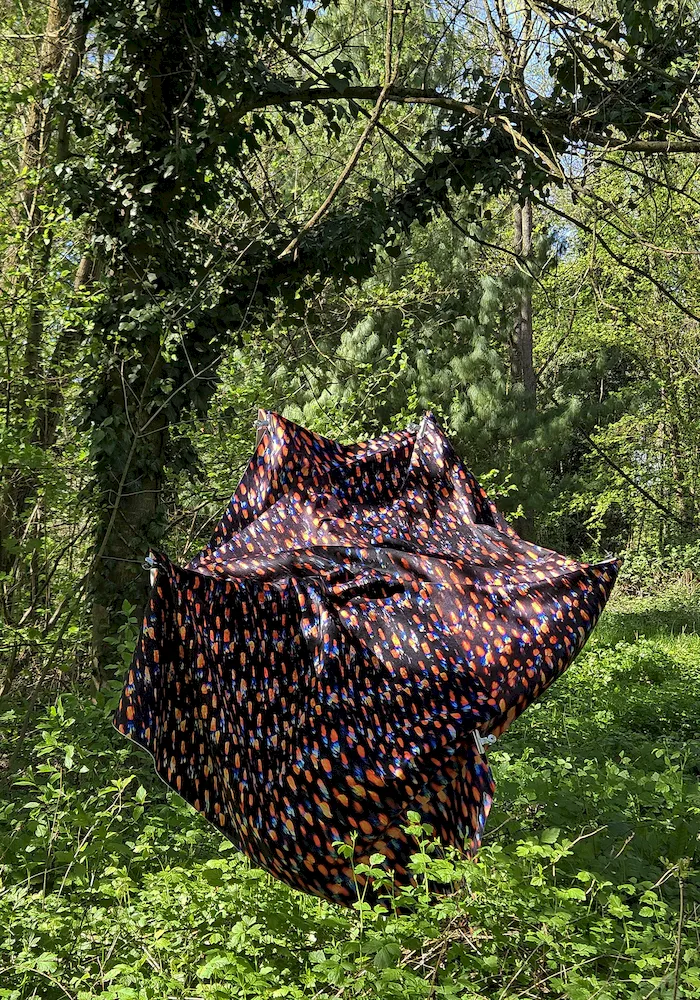
Re-Registres turns to the tissuthèque collection housed at the Villa Burrus, in Sainte-Croix-aux-Mines, approaching it as a register of patterns that enter into dialogue with landscapes. Among the thousands of fabric samples produced between 1790 and 1939 — that is, before the Second World War and before the advent of colour photography — six patterns were selected.

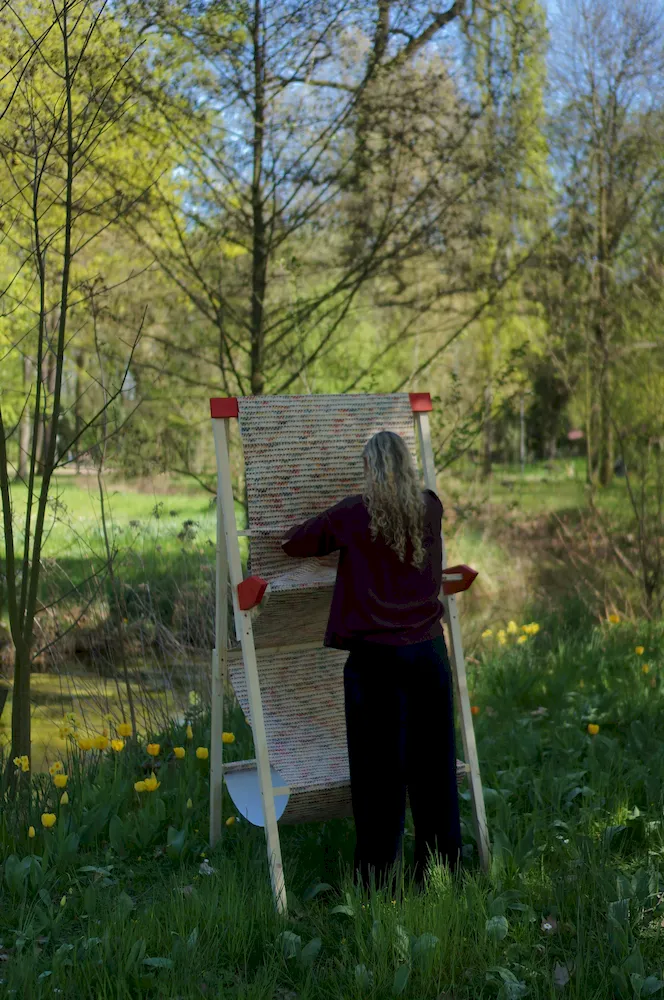
Each of these textile fragments, just a few square centimetres in size, is digitised and then transformed through extension using various digital tools. From this transformation emerges a version printed onto textile at a format of 140 × 200 cm. A structure is then specifically designed to install this textile within a landscape: the patterns thus enter into dialogue with their surroundings, at times seeking to blend in, at other times creating contrast. The installation is finally photographed, this image forming the last step of the process.

Through this approach, the fabric samples are set into play within space, in relation to a landscape, exploring forms of camouflage, visual continuity and rupture. Each pattern tells a small story: a weaving loom recalling the distribution of thread through the valley, a woman in an apron gazing at a stretch of water, a washing scene by the riverbank, a walk across a bridge. Pictorial echoes surface along the way — a swing in the manner of Fragonard, a bridge as in Monet, a field in the spirit of Sérusier.

Re-Registres thus reveals how a discreet textile heritage can become the starting point for a sensitive exploration of landscape and the memory of place.