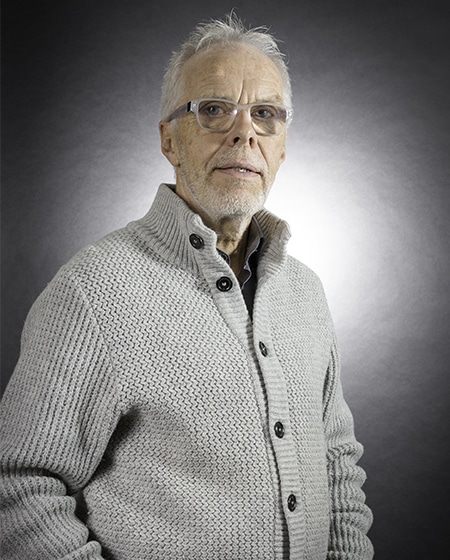
Dieter Filler

After studying artistic and manual education, Dieter Filler could only pursue his artistic ambitions during his free time, mainly with clay creations or bookbinding works. It was when he moved to Switzerland in 1993 that he had his first contact with patchwork. Thanks to courses, he learned traditional techniques, which were quickly expanded to include new materials and methods, leading to Textile Art. In the meantime, for Dieter Filler, it’s always a challenge to find new ways to expand the range of expressive possibilities. Exhibitions followed one another.Recently, his works have met with great success: in 2020, 55 of his works were presented in Menton. In 2021, he won the first prize in a France Patchwork competition, and his work was featured on the poster of the 2021 European Patchwork Meeting (26th edition). In 2022, he also won the first prize in the Artextures competition of France Patchwork.

EXHIBITION

Inspirations

Town

Sainte-Marie-aux-Mines

Year

2023

A word, half a sentence, taken from a conversation on the train between two fellow passengers. A quote or a significant sentence read in an interesting book; nature with its manifold patterns and structures, the beauty of a material, a social phenomenon that questions the effects of our wasteful society, all these elements provoke fantasies and allow ideas to develop which want to be realised with Dieter Filler’s own means of expression. One wants to integrate very interesting but little known materials into a picture. Certain colours make you think about the value and meaning of colour and the urge to work with it. The techniques and materials used in the production are as varied and diverse as the sources of inspiration. Textile art is the joy of transforming different materials to achieve a new aesthetic. Dieter Filler: “I always feel that there are not enough days for all of the ideas, plans and dreams that are floating around in my head.” Techniques and materials used… A whole range of textiles are used including synthetic fabrics, sometimes melted, as well as metal, PET bottles, packaging material, felt, polyethylene tarpaulins, bark or glass. An embossed third dimension has been included. The techniques vary from traditional patchwork to new techniques developed by the artist himself.